Archive

Press Release: Top-Down Political Reform in Arab World Prolongs Stagnation

Despite passing considerable economic and social reforms Arab regimes continue to avoid substantive political reforms that would jeopardize their own power
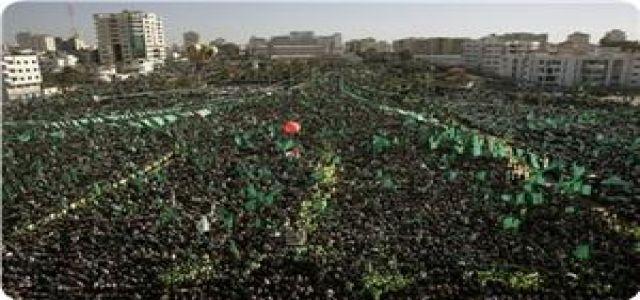
Hamas on Its 20th Anniversary

Islamic Resistance Movement Hamas has recently marked its twentieth anniversary. It was founded on Dec, 14th, 2007. Historically speaking, the movement was founded decades before this declared date of foundation.

Is The Islamic Project Backpedaling?

Whenever an Islamic experience faces a failure whether it is resulting from the Islamic movement itself or due to external factors, like what happened to Jordan’s Muslim Brotherhood in latest

Egypt’s YouTube Democrats

Is the cause of liberal democracy in the Arab Middle East dead? It would be easy to jump to such a conclusion in Washington, given the Bush administration’s shameless retreat

A case of selective hearing

In her opinion page article on Dec. 8, Ayaan Hirsi Ali, the former Dutch legislator and author of "Infidel," accused the so-called "moderate" Muslims of remaining silent instead of condemning

Political Islam Online

The stark contrast between two different perspectives on the interaction between secularism and Islam, which were presented in articles in today’s issue of the newspaper Asharq-alawsat, revealed the serious ideological

Effect of Corruption on Tax Revenues in the Middle East

Governments in the Middle East should implement anti-corruption reforms in order to raise tax revenues and maximize social welfare, according to Patrick Imam and Davina Jacobs in “Effect of Corruption

Should Democracy Be Promoted or Demoted?

Success in promoting democracy requires building partnerships with Middle Eastern countries and establishing regional norms, confidence-building measures, and other forms of dialogue, according to Francis Fukuyama and Michael McFaul in

The New Protest Movements in Egypt: Has the Country Lost Patience?, Ahmad Baha’eddin Shaaban

In Al-Ikhwan al-Muslimun (The Muslim Brothers), Khalil al-Anani analyzes the Egyptian Muslim Brotherhood’s intellectual, social, and political discourses, the evolution of its relationships with society and the ruling establishment, and